
Causes of presbyopia
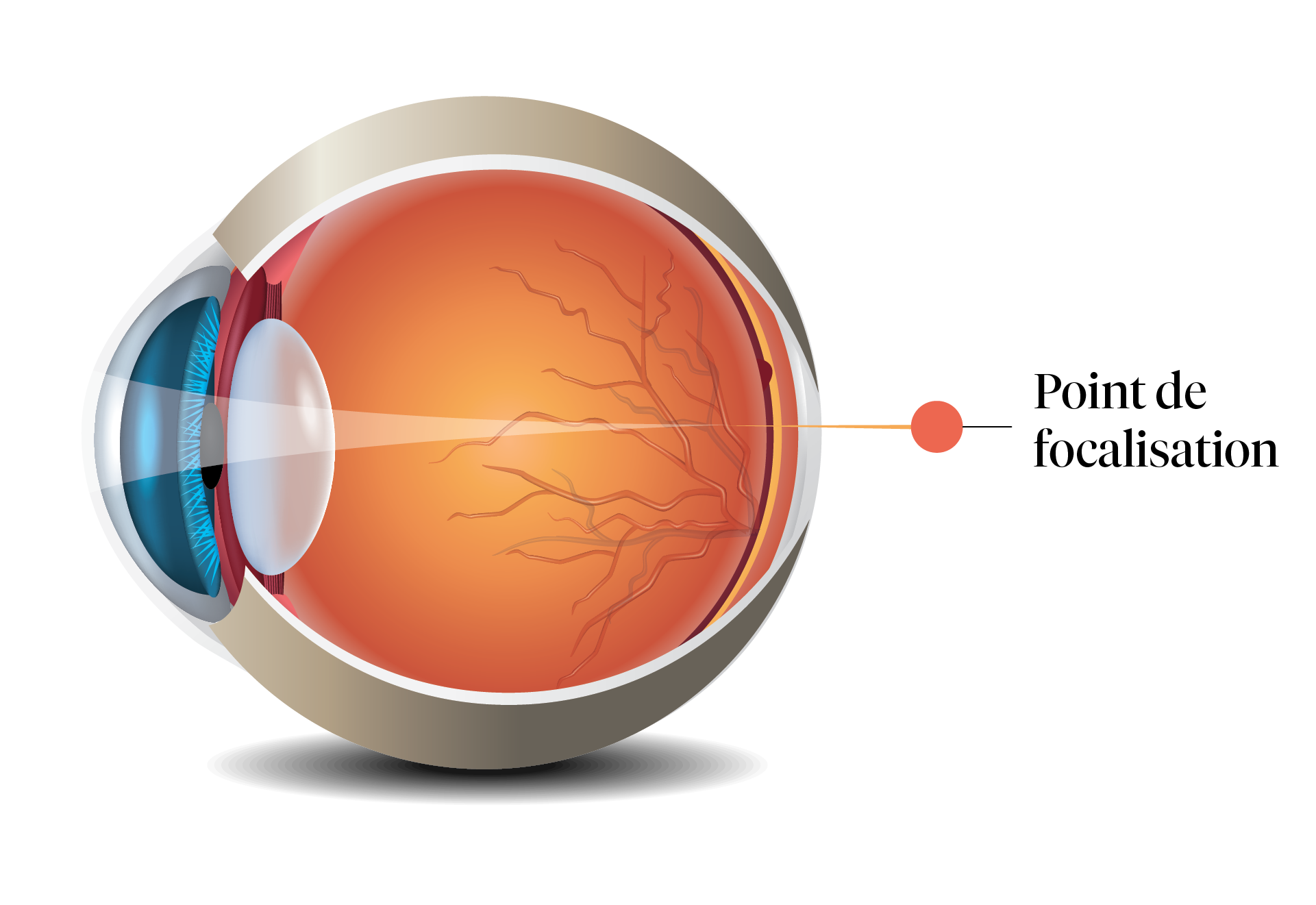
Age is the main cause of presbyopia. As the crystalline lens and its capsule age, they become more rigid and lose elasticity. This difficulty focusing on near objects is inevitable and affects everyone over the age of 40. Nothing can prevent the eventual onset of presbyopia. This age-related decline in near vision is a universal part of visual aging.
As presbyopia progresses, light increasingly converges at a point behind the retina, making near vision blurry.
People with hyperopia, who already have difficulty seeing clearly up close, may feel the effects of presbyopia earlier. Because their crystalline lens has had to work harder than average over many years, it may in some cases age more quickly.
People with myopia, on the other hand, may experience the effects of presbyopia later. Their myopia can actually become an advantage by helping compensate for the symptoms of presbyopia.
Signs of presbyopia
When wearing your distance glasses, certain signs may indicate the onset of presbyopia:
- You tend to hold reading material farther away
- You experience eye strain or blurred vision during prolonged near work
- If you are myopic, you regularly remove your glasses to see better up close
An eye exam with your vision care professional can help detect presbyopia, determine what stage you are at, and review your correction options.
How is presbyopia corrected?
To correct presbyopia, the professionals at IRIS Ophthalmology Clinic generally recommend waiting until it has fully matured — meaning the crystalline lens has lost most of its elasticity. This stage is normally reached between the ages of 55 and 60. In some cases, hyperopic patients may be candidates for lens replacement surgery at a younger age, since they experience the symptoms of presbyopia sooner.
It is possible to replace the crystalline lens with an intraocular lens to correct presbyopia. This lens is carefully selected by the clinic’s professionals to ensure that its features are suited to your lifestyle. With the appropriate power, these lenses can allow you to see clearly up close, at a distance, or both near and far at the same time.

Lens replacement surgery
Surgery for presbyopia using intraocular lenses is the same procedure as cataract surgery. However, it is not necessary to wait until cataracts develop before replacing the crystalline lens.
Download our guide on intraocular surgery for more information
Are you a candidate for surgery?
Schedule a personalized evaluation with one of our specialists and find out whether surgery could improve your vision.
